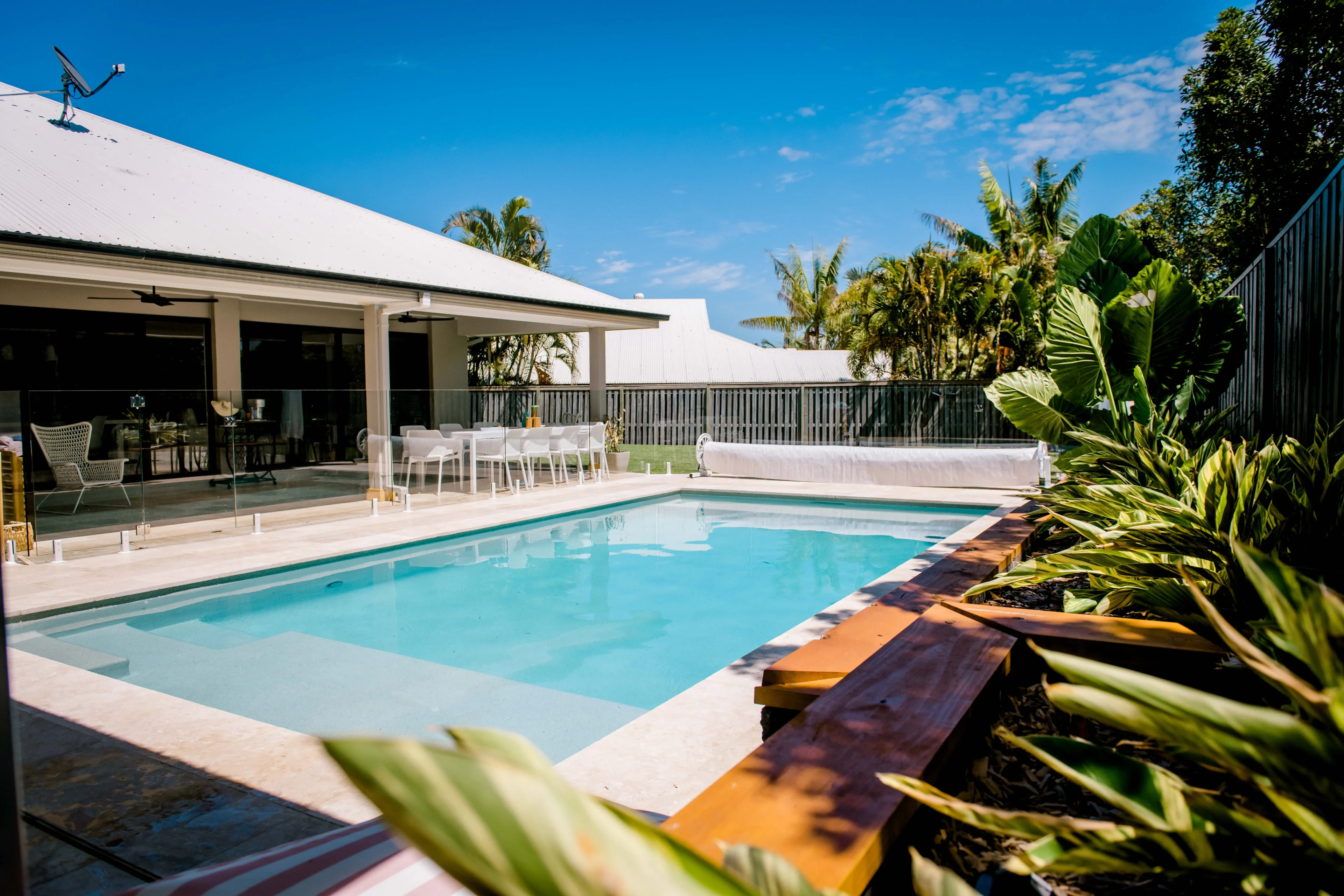
Most properties in Queensland can accommodate a pool, but the answer depends on a few key factors. This guide breaks down what actually determines if a pool is possible on your block, including space, setbacks, access, and site conditions.
It also explains how close a pool can sit to your house and boundaries, and what can limit your design. By the end, you will have a clear idea of what to expect before you start planning.
What Determines If You Can Build a Pool?
A pool is possible on most properties, but the final design depends on how your block performs across a few key areas. These factors shape what can be built, where it can go, and how much flexibility you have.
Available Space on Your Block
You need enough usable space for the pool shell, required clearances, and a functional surrounding area. As a guide, many pools require at least 30–50m² once you allow for coping and access space.
The layout often matters more than total size. Common limitations include:
Even on smaller blocks, a well-planned concrete pool can still work, but the design needs to respond to the space.
Distance to Your House
A pool cannot sit directly against your home. Excavation close to footings can affect structural stability, especially on reactive soils.
The required distance depends on:
In many cases, pools sit around 1–2 metres from the house. Closer placement is possible, but it usually requires engineering, such as structural support or piering too protect the home.
Boundary Setbacks
Pools must comply with setback requirements, but there is no single fixed distance that applies to every site.
What affects boundary distance:
As a general guide, setbacks often fall within 1–1.5 metres, but some projects can achieve reduced setbacks through alternative solutions or approvals. This is where early design input makes a difference.
Easements, Sewer Lines & Infrastructure
Easements and underground services can significantly restrict pool placement. Sewer lines are one of the most common issues and often run through the backyards of suburban properties. Before planning your pool, you can check your property for registered underground and overhead infrastructure within the proposed work area on the BYDA Portal.
Key considerations:
This is one of the main reasons pool layouts need to be planned early. But there are online tools to help you learn where easements and sewer lines might be.
Site Access
Access determines how the pool can be built and installed. Machinery needs a clear path to the excavation area.
Typical access requirements:
Limited access does not rule out a pool, but it may require smaller equipment, staged excavation, or crane work, which can affect cost.
Slope and Soil Conditions
Sloping blocks and soil type both influence construction.
On sloped sites:
On reactive or unstable soils:
These conditions are common across Brisbane and the Gold Coast and are often manageable with the right design approach.
Local Council and Approval Requirements
Every pool project must meet building regulations before construction can begin.
Typical requirements include:
Approval pathways vary depending on the site. Some projects move through quickly, while others require additional documentation or design changes.
Getting clarity on approvals early helps avoid delays later in the process.
How Close Can You Build a Pool to Your House?
There is no single distance that applies to every property. The allowable distance depends on your home’s structure, the soil, and how the pool is designed.
In most cases, pools are positioned around 1–2 metres from the house, as this provides enough clearance to protect the footings during excavation. This distance can change based on site conditions though.
What affects the distance to your house
- House footings: Homes built on slab-on-ground foundations need careful consideration. Excavation too close can weaken the support around the slab. Homes on piers may allow more flexibility, depending on spacing and depth.
- Soil conditions: Reactive soils expand and contract with moisture. Digging close to the house can increase movement risk if not managed correctly.
- Pool depth and design: Deeper pools require more excavation, which increases the impact on the surrounding ground. Shallower or compact designs can sometimes sit closer.
- Engineering requirements: If a pool needs to be closer to the house, structural solutions such as piering or retaining systems may be used to support the area between the pool and the home.
The right distance comes down to how these factors work together on your specific site, which is why a tailored design and early assessment make a significant difference.
How Close Can a Pool Be to Your Boundary?
The distance between your pool and boundary is not fixed. It depends on local council rules, the certifier assessing the project, and how the pool is designed.
In many cases, pools sit around 1–1.5 metres from the boundary, but this is only a guide. Some sites allow reduced setbacks where the design meets specific requirements or an alternative solution is approved.
What affects boundary distance
- Local council requirements: Each council sets its own guidelines. These rules outline standard setbacks, but they can vary depending on zoning, overlays, and site conditions.
- Building certifier assessment: A private certifier reviews the design and confirms whether it meets compliance. In some cases, they can approve variations if the design addresses safety and structural requirements.
- Pool height and design: Raised pools, infinity edges, or pools with structural walls near boundaries may require additional clearance or engineering.
- Surrounding structures: Fences, retaining walls, and neighbouring buildings can all influence how close the pool can be placed.
Can you build closer to the boundary?
It is possible on some sites, but it depends on approval. Reduced setbacks may be considered if:
This is where a custom concrete pool offers more flexibility, as the design can be adjusted to suit tighter conditions.
What to keep in mind
Boundary setbacks are one of the most common constraints in pool design. Getting this wrong can lead to redesigns or delays during approval.
A clear plan from the start helps ensure the pool fits within the allowable space while still achieving the layout you want.
Common Reasons Pool Plans Can Change
Even when a pool is possible, these issues often affect the final layout:
What to Do Next If You Are Unsure
If you are not sure whether your property is suitable, the next step is to assess the site early. This will confirm what is possible and highlight any constraints before design begins.
A site review typically looks at:
This process gives you a clear starting point and helps avoid redesigns later.
If you are considering a pool but want clarity first, our team can review your block and walk you through what will work.
We focus on practical outcomes, so you understand your options before committing to a design.
FAQs
Do I need council approval to build a pool in Queensland?
Pools require building approval from a certifier before construction begins. Some properties may also need planning approval depending on zoning, overlays, or site conditions. Pool fencing must also meet Queensland safety standards and be certified.
At Aqua Living Pools, we organise all of this in house for you to keep the project on track!
What is the minimum space required for a pool?
There is no fixed minimum, but many pools require at least 30–50m² once you allow for the pool shell and surrounding clearance. Smaller blocks can still work with a compact, well-planned plunge design.
Can I build a pool on a small block?
Yes, many small blocks can accommodate a pool. The design will need to respond to space, access, and setback requirements. Custom concrete pools are often better suited to tighter areas.
Can a pool go next to a house wall?
It is possible in some cases, but it usually requires engineering to protect the home’s structure. Most pools are positioned with some clearance to reduce risk during excavation.
What happens if there is a sewer line on my property?
Pools typically cannot be built directly over sewer infrastructure without approval. In some cases, build-over approval is possible, but it can affect design, cost, and timelines.
Reach out to our team today and we can walk you through this process.